

Having High Fluid Intelligence Boosts Our Ability to Accept Corrected Misinformation, According to New Research
In the United States, misinformation has been cited as a major source of increasing political polarization. Research suggests some have an easier time changing their worldview after fact-checking


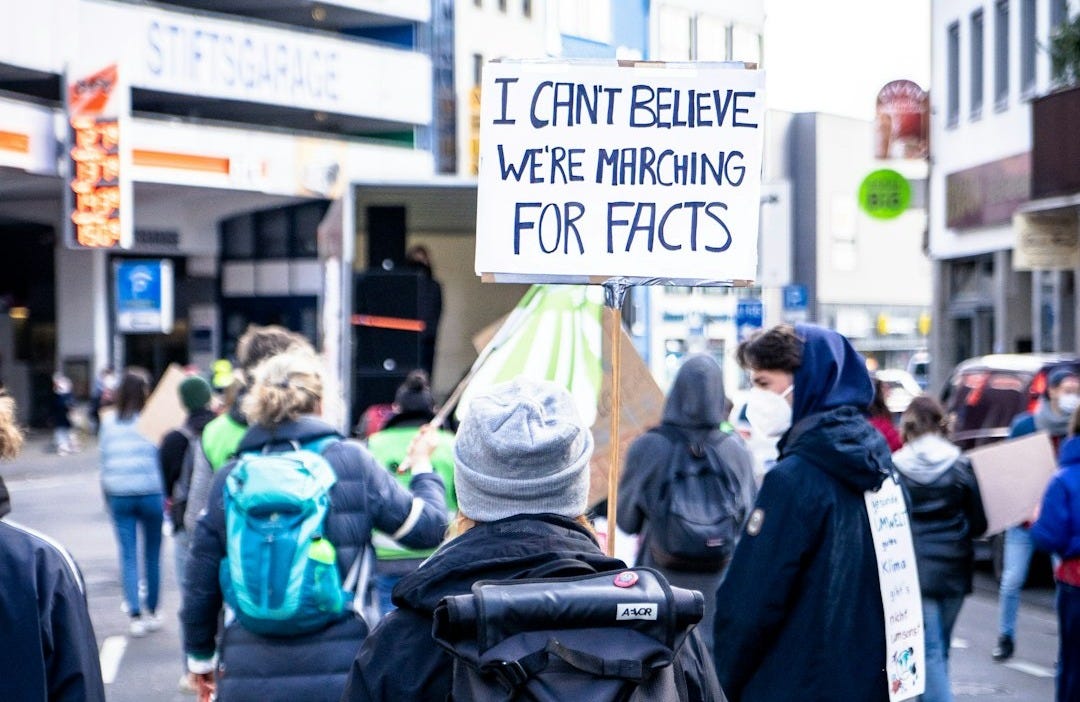
A recent article in the Cognitive Research: Principles & Implications journal discusses how some individuals have an easier time accepting corrections when initially presented with misinformation. Results indicated that those with higher fluid intelligence were more likely to accept new information and adjust their attitudes after being presented with corrected misinformation.
Misinformation (or disinformation), in particular, have had lasting impacts in all spheres of life worldwide, ranging in a variety of topics from the environment, politics, social issues, to healthcare. In the United States, misinformation has been cited as one of the multiple sources of increasing political polarization as well. One of the emerging strategies of combating this online is through fact-checking and correcting misleading information on social media. However, these strategies may not work well for everyone, and not everyone adjusts their beliefs after being presented with updated information.
This was the primary research question of the researchers: do personal characteristics like fluid intelligence or the need for cognition predict who is more likely to update their attitudes in response to corrected information?
What is fluid intelligence?
Fluid intelligence is one’s ability to flexibly think and reason about new situations or problems, without prior experience to work from. It can include identifying patterns, using logic, and critical thinking. Some examples could include solving a complex puzzle without instructions, or even creative tasks such as painting or learning to play an instrument without any prior training.
What was the study methodology?
In the present study, researchers conducted two online studies (N= 355; 725) to test if personal factors like fluid intelligence or the need for cognition (desire to engage in deep thinking) impacts people’s ability to adjust their attitudes after being presented with corrected misinformation.
Participants were mostly university students, and were divided into experimental and control groups. Both groups read a news article on the (relatively neutral) topic of trust-based working hours, but only the experimental condition was presented with misinformation on the topic. The misinformation stated that trust-based working hours had negative effects on company’s who engaged in it, but these participants received an independently fact-checked correction message after that debunked the initial claim.
The researchers measured the following:
participants’ attitudes about trust-based working hours before and after the presented correction
fluid reasoning, which included a task on deductive logical reasoning
Need for cognition, which included survey items on preferences toward intellectually-engaging tasks
The second presented study operated under similar conditions, but had a larger and more diverse sample (N=725).
Both studies indicated that fluid intelligence was positively correlated with the willingness to adjust attitudes following a factual correction to misinformation. As individual fluid intelligence markers increased within the sample, the more effective they were at changing their thinking patterns when presented with new information.
“A common strategy for countering misinformation is correcting and fact-checking false information. It has repeatedly been shown that a correction message diminishes but not always fully eliminates the effects of previously presented misinformation. We demonstrated that people with higher fluid intelligence, that is, people with a better general reasoning ability, are better at adjusting their attitude in response to the correction of misinformation”
— Fabian Hutmacher, researcher, University of Würzburg
What next?
More research is needed to learn more on if this effect depends on the type of misinformation presented (and subsequently corrected). For example, changing deep-held political beliefs may be more resistant to corrections even in individuals with high fluid intelligence. Future research can also pilot test what strategies beyond debunking or fact-checking can effectively reach a wider variety of people presented with misinformation online.
Hutmacher, F., Appel, M., Schätzlein, B. et al. Fluid intelligence but not need for cognition is associated with attitude change in response to the correction of misinformation. Cognitive Research 9, 64 (2024). https://doi.org/10.1186/s41235-024-00595-1
 |
|