

Embedded Violence: How Power Structures Sustain Sex Trafficking
Too often sex trafficking is portrayed as an external problem, associated with unstable regions or organised crime abroad. Yet research points in another direction.


Trafficking in Plain Sight
Last September, Naasón Joaquín García, leader of the Mexican megachurch La Luz del Mundo, appeared in a U.S. court accused of sex trafficking and child exploitation. His case illustrates how abuse can take place inside respected institutions, protected by authority and legitimacy.
A few years earlier, the case of Jeffrey Epstein also revealed a similar reality. For years, he maintained a network of exploitation while surrounded by wealth, reputation and political connections. What links García and Epstein is not only the scale of their crimes but rather the fact that they do not resemble the stereotype of the hidden predator.
In her TEDx talk, the professor Meghan Sobel highlights this reality :
“We want the purchasers of this sex to look like greasy, creepy, back-alley men that live in faraway places. But they’re not. Many are clean-cut, well-dressed, successful Americans.”
This observation challenges the way trafficking is usually imagined. Too often it is portrayed as an external problem, associated with unstable regions or organised crime abroad. Yet research points in another direction.
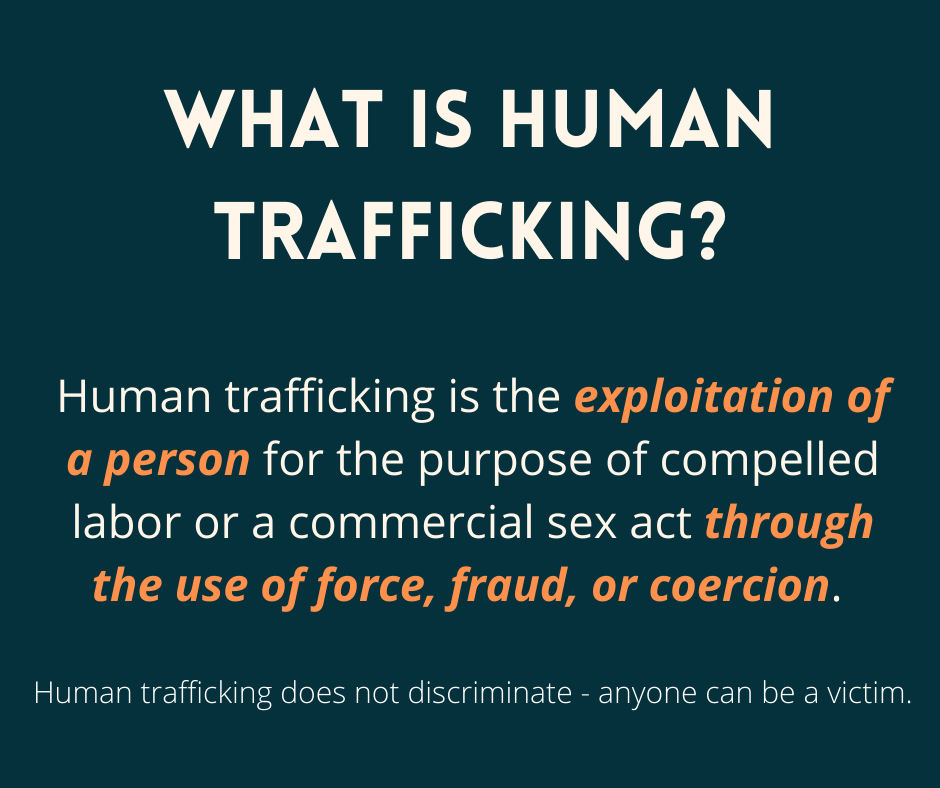
Zimmerman and Kiss describe human trafficking as a public health issue affecting communities everywhere, while the UNODC reports that most victims are exploited close to home by people they know.
Trafficking is not peripheral but embedded in our societies.
The Psychology of Coercion
If trafficking is not always visible, it is because coercion often works through psychological rather than physical means. Survivors frequently describe feelings of guilt, dependency or misplaced loyalty toward their traffickers.
In García’s case coercion relied on spiritual authority: victims were told to fear divine punishment and exclusion from their community. Epstein used promises of career opportunities and social status. These strategies were different but the mechanism was the same, control maintained through manipulation of trust and identity rather than overt violence.
Psychological research helps explain how this works. The effects rarely end once a person escapes. Survivors often continue to struggle with the weight of coercion, which is why trauma-informed support is essential (Hopper and Gonzalez, 2018). Studies confirm how lasting this impact can be, with high levels of PTSD, depression and suicidality long after the abuse has ended (Oram et al., 2012).
Human Rights Frameworks & Their Limits
Trafficking is recognised in international law as a violation of human rights. The Palermo Protocol and the Council of Europe Convention both commit states to prevention and protection. On paper this is progress, but the way these commitments are implemented often falls short.
Many responses still prioritise prosecution and border control over survivor well-being. Gallagher shows how this emphasis narrows the scope of protection, while Brysk and Choi-Fitzpatrick argue that treating trafficking only as crime obscures its systemic character and prevents survivor-centred reforms.
Another limitation lies in what Raby calls the myth of the ideal offender. Courts and media continue to rely on a narrow image of the trafficker as a violent outsider. Exploitation carried out by respected figures, whether through spiritual authority or professional status, is harder to acknowledge.
Survivors whose experiences do not fit the “ideal” narrative often remain unrecognised. This gap between law on paper and lived coercion undermines the protection that human rights frameworks promise.
Poverty, Inequality & Demand
However, focusing only on offenders risks ignoring the conditions that sustain trafficking. Poverty, limited education, migration insecurity and gender inequality create vulnerabilities that traffickers exploit.
At the same time trafficking is maintained by demand. Sobel reminds that “as long as there is demand, there will be supply.” Epstein’s network thrived because clients were willing to pay for access to minors. García’s influence endured because obedience to religious leadership was normalised in his community.
Data from the UNODC show that women and girls from marginalised groups are disproportionately targeted, revealing how inequality and demand reinforce one another. Scholars underline this dual dynamic. Shelley situates trafficking within global economic disparities that make exploitation profitable, while O’Brien insists that unless demand is addressed directly, interventions risk remaining symbolic. Tackling trafficking therefore means addressing both vulnerability and demand.
Decolonizing the Fight & Centering Survivors
Another question is who defines anti-trafficking strategies. Many international NGOs still operate with a “white savior” model, importing solutions that ignore local contexts and reproduce power imbalances. These interventions may be well-intentioned but in reality, they can harm the very people they are meant to protect.
There are alternatives. In Ghana, Many Hopes works from within communities, focusing on education, dignity and sustainable reintegration. In her TedX, Sobel highlights local organisations such as Urban Light Thailand, that build trust and legitimacy by understanding cultural dynamics. These models show how local leadership can make interventions more effective and less intrusive, as opposed to the Western “smart raids”.
The risks of externally driven operations are real. Survivors have described feeling stigmatised after being “rescued,” isolated from their families or retraumatised by forced relocation. When interventions deny agency they can actually replicate the powerlessness of exploitation itself.
That is why a human rights-based approach has to be both trauma-informed and locally grounded. Survivors need access to healthcare, housing, education and economic opportunity, but they also need agency. Programs designed with survivors rather than for them are more likely to restore dignity and independence.
Conclusion
So yes, sex trafficking is not what we tend to think it is. Cases like García and Epstein show that traffickers are not always outsiders but rather often figures of trust and respectability. The myth of the ideal offender blinds us to these realities, while inequality and demand sustain cycles of exploitation.
Psychology can help and reveal the opaque, yet powerful mechanisms of coercion. Human rights frameworks provide principles, but they need to be applied in ways that address complexity and centre survivors.
Effective responses also require humility: rejecting paternalistic models and supporting local expertise. Progress will not be measured by arrests alone. It will be measured by whether survivors can rebuild their lives with dignity, free from exploitation, and be supported by systems that recognise their rights in practice as well as on paper.
References & Further Reading:
Brysk, A., & Choi-Fitzpatrick, A. (2012). From human trafficking to human rights: Reframing contemporary slavery. University of Pennsylvania Press.
Gallagher, A. T. (2010). The international law of human trafficking. Cambridge University Press.
Hopper, E., & González, L. D. (2018). A trauma-informed approach to human trafficking. Behavioral Medicine, 44(3), 223–233.
Many Hopes. (n.d.). Many Hopes: Changing children’s stories.
O’Brien, E. (2018). Challenging the demand for sex trafficking. Routledge.
Oram, S., Stöckl, H., Busza, J., Howard, L. M., & Zimmerman, C. (2012). Prevalence and risk of violence and the physical, mental and sexual health problems associated with human trafficking: Systematic review. PLOS Medicine, 9(5), e1001224.
Raby, R. (2022). The myth of the “ideal offender”: Rethinking trafficking, power and accountability. Anti-Trafficking Review, 18, 41–55.
Shelley, L. (2010). Human trafficking: A global perspective. Cambridge University Press.
Sobel, M. (2014, October). Sex trafficking isn’t what you think it is. TEDxMileHigh.
United Nations Office on Drugs and Crime. (2020). Global report on trafficking in persons 2020. UNODC.
Urban Light. (n.d.). Urban Light Thailand.
Zimmerman, C., & Kiss, L. (2017). Human trafficking and exploitation: A global health concern. PLOS Medicine, 14(11), e1002437.

Mindbridge is the nation’s leading non-profit using brain and behavioral science to empower human rights defenders.
We conduct programming, support partnerships, and direct research at the intersection of psychological science and human rights. Through these efforts, Mindbridge is growing a science-driven community that gives human rights defenders access to the hearts and minds of those they serve.
To learn more about how we use brain and behavioral science to empower human rights defenders, find us at mindbridgecenter.org, read our blog on Psychology Today, and follow us on social media.
Instagram: Mindbridge_Center
Facebook: Mindbridge Center
LinkedIn: The Mindbridge Center
BlueSky: MindbridgeCenter

 | A guest post by
|