

What We Can Learn From “Jimothy” During Disability Pride Month
In July, a viral animal video out of Seattle showed us the power of acceptance and belonging

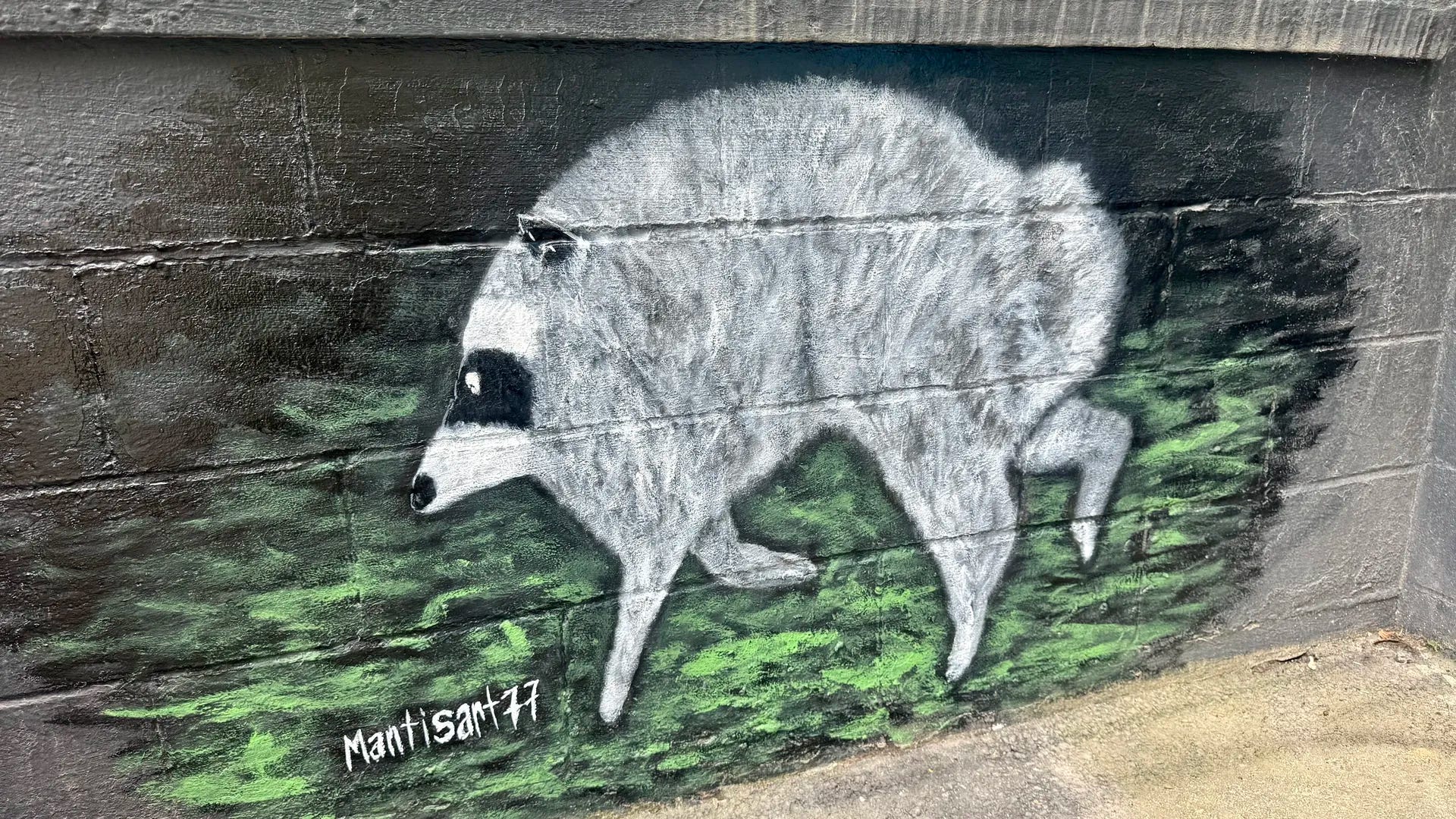
A raccoon named “Jimothy” has recently taken the internet by storm due to his uniqueness and endearing nature. The cuddly raccoon surfaced in a TikTok video in early July posted by a Seattle woman recording him scampering throughout her yard.
While trespassing backyards is commonplace for raccoons, Jimothy’s appearance and short stature caught the attention of millions of people across platforms such as Facebook, TikTok, and Instagram, with users responding with outpouring love and support for his existence.
Experts say that Jimothy has short-spine syndrome, which is a rare birth defect causing the spine to be shorter and compact. While this condition is more common in dogs, animals with this condition, such as Jimothy, can live pleasant lives with proper care, love, and support (Shiloh Veterinary Hospital, 2024).
Through other viral videos of Jimothy, we can see that his raccoon family provided him with just that. Indeed, professionals such as Marcie Logsdon, a professor from Washington State University’s Veterinary Teaching Hospital, describe Jimothy as seeming to be adapting quite well for his condition and displaying undeniable resilience (Gaitán, 2026).
“The fact that he’s made it to this age tells me that he’s managing and that he’s adapting”
- Dr. Marcie Logsdon, Washington State University
Disability Statistics
While Jimothy may not be aware of his popularity, there is a clear picture of what widespread support can do. However, for humans with disabilities, support is not always as easily found.
According to recent statistics from the Centers for Disease Control (CDC), one in four Americans reports having some type of disability, with some reporting living with multiple conditions. Unfortunately, Americans with disabilities also face intense challenges such as healthcare costs, stigma, and lack of social support. In 2026, more than a quarter of disabled individuals could not meet healthcare needs such as medication, regular primary care, or testing due to costs (CDC, 2026).
Congruent with these findings, individuals with disabilities are more likely to struggle with comorbid mental health conditions such as depression and anxiety (Li & Wang, 2020; Tough et al., 2017).
The Path Forward
Social support is widely recognized as a predictor for positive mental health outcomes, and for individuals with disabilities, this may be especially true.
According to Jensen et al. (2014), social support in individuals with disabilities is associated with lower rates of depression, regardless of age, gender identity, or type of disability. In addition, research has also shown that social support helps counteract certain adverse effects of the disability itself, such as persistent stress (Tough et al., 2017).
However, it is important to note that an increased quantity of support does not necessarily equate to better outcomes. In fact, Tough et al. (2017) suggest that the quality of relationships, whether that be with friends, family, or spouses, is much more effective in maintaining desirable mental health for individuals with disabilities rather than an influx of perceived support.
So while it may be strange to compare humans and raccoons, the case of Jimothy provides us with an idealized image of how disabilities can be supported in the media. While research suggests that the quality of support systems is more crucial than the size, Jimothy and his supportive following provide an example of how awareness can lead to reduced stigma and accessible support.
Indeed, many have commented on Jimothy’s posts expressing their relation to him and how the small raccoon can make millions feel a sense of belonging.


Mindbridge is the nation’s leading non-profit using brain and behavioral science to empower human rights defenders.
We conduct programming, support partnerships, and direct research at the intersection of psychological science and human rights. Through these efforts, Mindbridge is growing a science-driven community that gives human rights defenders access to the hearts and minds of those they serve.
To learn more, find us at mindbridgecenter.org, read our blog on Psychology Today, and follow us on social media.
Instagram: Mindbridge_Center
Facebook: Mindbridge Center
LinkedIn: The Mindbridge Center
BlueSky: MindbridgeCenter

 | A guest post by
|